 Türkçe
-
PROJECTS
- ABOUT US
-
DEPARTMENTS
- Silviculture Department
- Department of Forestry Law
- Watershed Management Department
- Department of Soil Science and Ecology
- Department of Forestry Policy
- Department of Forest Entomology and Protection
- Department of Forest Management
- Department of Forest Botany
- Department of Forestry Economics
- Department of Forestry Construction and Transportation
- Department of Surveying and Cadastre
- EDUCATİON AND TRAINING
- QUALITY
- INTERNAL CONTROL
- MÜDEK
- BOFZK HERBARIUM
- RESEARCH
- CANDİDATE STUDENTS
- REGULATIONS AND GUIDELINES
- Course Information Package
- Our Graduates
-
CONTRIBUTORS
- CONTACT
- Contact Form

HISTORY OF THE BOFZK HERBARIUM
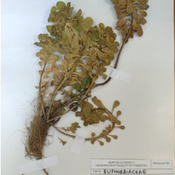
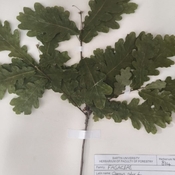
A herbarium is a collection of dried plant specimens preserved, cataloged, and organized according to family, genus, and species for study.
Plants, one of the most important natural resources of countries, are the subject of research for many different disciplines, from biological sciences to engineering sciences. With 11,707 plant taxa and an endemism rate of 31.12%, Turkey, which has more plant species than almost all of Europe, is considered among the world's important countries in terms of biological diversity (Avcı 2005, October 2014). Türkiye is also a center of origin for many species. The fact that the Anatolian peninsula is located at the intersection of three different flora areas (European-Siberian, Mediterranean, and Irano-Turanian), its diverse macro and microclimate types, bedrock and soil diversity, and geomorphological diversity are important factors that lead to Türkiye's rich plant species endemism (Avcı 2014, Avcı and Avcı 2014, Ketenoğlu et al. 2014, Kurt 2014). Many foreign and domestic scientists have conducted studies on the Flora of Turkey from the 1800s to the present (Baytop 2004). Many foreign botanists, such as Davis and Huber-Morath, have contributed to the identification and description of species in the Anatolian flora and have defined new plant species. Between 1965-1985, P.H. The tenth volume of "Flora of Turkey and the East Aegean Islands" (Davis 1965-1985), edited by Davis and written in nine volumes with contributions from numerous botanists, was published in 1988. In subsequent years, Turkish botanists published an additional eleventh volume. Thus, the flora of Turkey was presented to the scientific community as an eleven-volume work. Ongoing flora studies continue to add new species to the Turkish flora every day. Collecting plants from the field constitutes the first step in taxonomic studies, in the process of identifying, describing, and diagnosing species in the flora of large or small areas such as countries, regions, provinces, localities, and mountains, and discovering new species. Plant specimens collected according to specific rules, dried, glued to cardboard, labeled, and arranged according to specific classification systems are preserved in dried plant museums called herbariums (Yaltırık and Efe 1989, Uma and Düzenli 2012). Herbaria, as scientific collections where dried plant specimens are systematically preserved, bringing together time and space, serve as research centers for many scientific disciplines.
Starting with the 2016 vegetation season, over 1000 plants from the Bartın flora have been added to the Zafer Kaya Herbarium (BOFZK Herbarium) of the Bartın Faculty of Forestry, located in the Ağdacı Campus of Bartın University. Plants in tree, shrub, and bush form, as herbaceous flora herbarium material, are preserved under suitable conditions in the BOFZK (Bartın Faculty of Forestry Zafer KAYA) Herbarium. Individual plants (or plant parts) are preserved and maintained over time; thus, present and future generations can identify the plants, study biodiversity, and use the collection to support conservation, ecology, and sustainable development.
Project Leader Prof. Dr. Barbaros YAMAN, researchers Prof. Dr. Zafer KAYA, Research Assistant As a result of the BAP project numbered 2021-FEN-A-017, titled "Digital Use of Bartın Forestry Faculty Herbarium (BOF) with QR Code System," led by Esra PULAT, 705 species and subspecies belonging to 91 families and 398 genera were identified and compiled into herbarium material from plant specimens collected between 2021-2023. Furthermore, the number of species and subspecies taxa has reached 1007 with 4 different TÜBİTAK 2209-A projects with application periods of 2018/2, 2021/2, and 2022/1. Work continues on a TÜBİTAK 2209-A supported project with application period 2024/1. These projects are increasing the academic capacity of Bartın Forestry Faculty.
The BOFZK Herbarium is named after Prof. Dr. Biography of Zafer Kaya
Prof. Dr. Zafer Kaya, whom we lost on Sunday, March 12, 2023, due to a sudden heart attack, was born in Elazığ in 1954. After completing his primary, secondary, and high school education in his hometown of Elazığ, he graduated from the Biology Department of the Faculty of Science at Istanbul University in 1979 with the title of Biologist. He successfully completed his integrated doctoral thesis entitled "Taxonomic, Ecological and Palynological Studies on Two Endemic Centaurea Species" in 1985 under the joint supervision of Prof. Dr. Betül Tutel (Istanbul University Faculty of Science) and Prof. Dr. Burhan Aytuğ (Istanbul University Faculty of Forestry). After working as a Research Assistant in the Department of Medical Biology at Marmara University Faculty of Dentistry between 1982-86 and as a Specialist Biologist between 1987-1994, he was transferred to the Department of Forest Botany at Zonguldak Karaelmas University Bartın Faculty of Forestry as an Assistant Professor on February 20, 1995. Dr. Zafer Kaya left BARÜ Bartın Faculty of Forestry on September 23, 2013.